
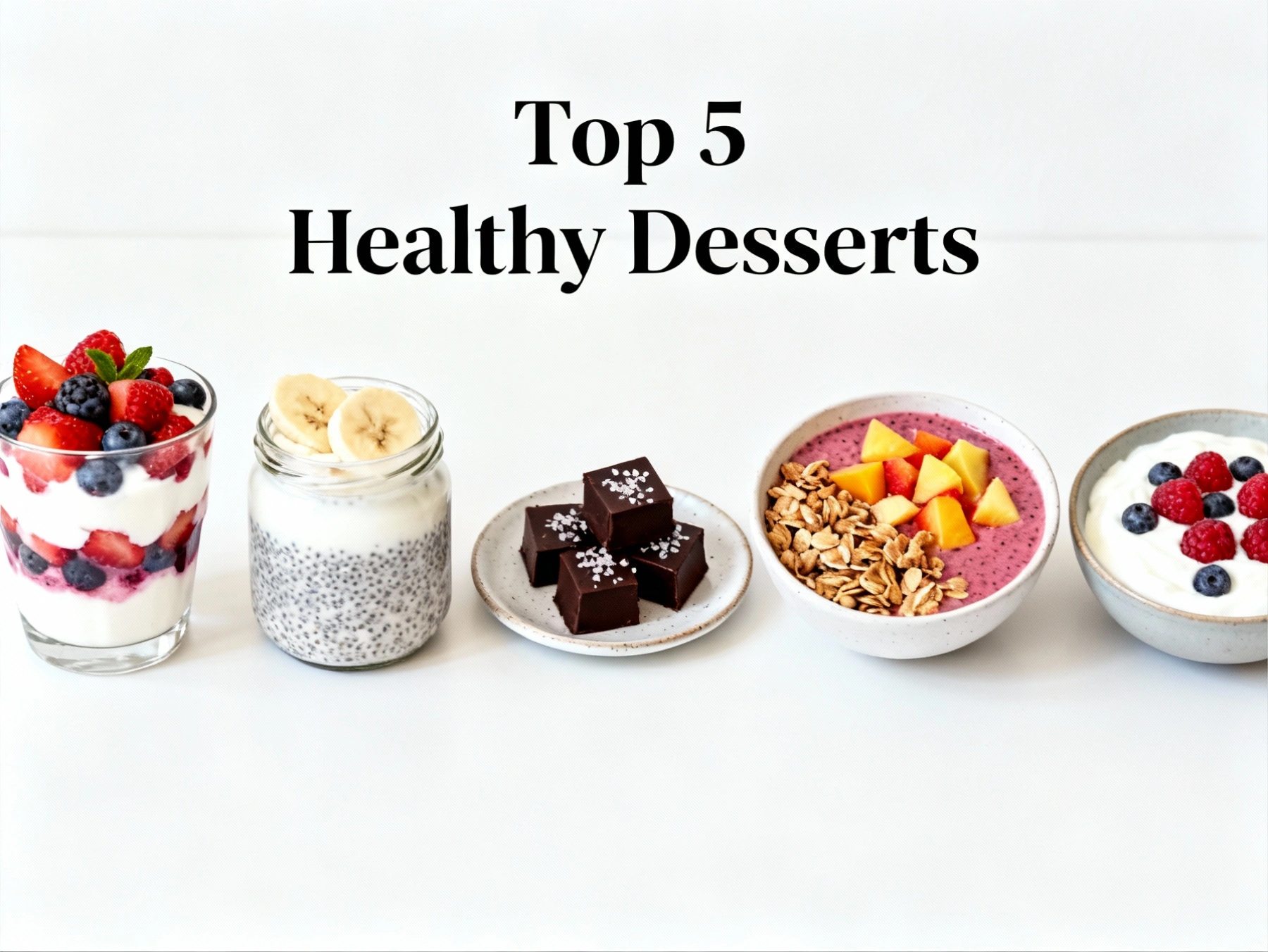
Top 5 Healthy Dessert Myths—Busted!
Have you ever picked up a dessert labeled “healthy” and thought you were making a guilt-free choice—only to feel bloated, unsatisfied, or confused afterward? You’re not the only one. The health-food aisle is full of claims that sound good on the surface but often hide misleading truths. If you’re serious about improving your eating habits while still enjoying sweets, it’s time to set the record straight. Let’s dive into the most common healthy dessert myths and learn what really matters.
Table of Contents
Myth #1: Low-Fat Means Healthy
The Truth About Low-Fat Labels
You’ve seen it before—desserts proudly claiming to be “low-fat” as if that alone makes them a smarter choice. But here’s the thing: when fat is taken out, something else usually goes in to make up for the taste. More often than not, that “something” is sugar or artificial additives.
- Low-fat often equals high sugar.
- Fat is essential for satiety and nutrient absorption.
- The calorie count doesn’t necessarily drop.
Smart Swaps to Try Instead
- Use full-fat Greek yogurt for creaminess and protein.
- Blend avocado or nut butter into chocolate-based treats.
- Incorporate healthy oils like coconut or olive in moderation.
Tip: Your body actually needs healthy fats to absorb fat-soluble vitamins like A, D, E, and K.
Myth #2: All Natural Sugars Are Good for You
The Glycemic Truth Behind Honey, Agave, and Coconut Sugar
Natural doesn’t automatically mean healthy. While honey, maple syrup, and coconut sugar come from plants, they still impact your blood sugar. If you’re not careful, “natural” desserts can spike your insulin just like white sugar.
- Honey and agave have similar glycemic loads to table sugar.
- Coconut sugar has a lower glycemic index but still contains fructose.
- Overuse can lead to energy crashes and cravings.
Natural Sweeteners Comparison Table
| Sweetener | Calories (per tsp) | Glycemic Index | Key Notes |
|---|---|---|---|
| Honey | 21 | 58 | Contains antioxidants |
| Maple Syrup | 17 | 54 | Includes zinc and manganese |
| Coconut Sugar | 15 | 35 | Lower GI, but still sugar |
| Stevia (natural) | 0 | 0 | Zero calories, no spike |
Pro Tip: Use fruit purees like applesauce or mashed bananas to naturally sweeten your desserts and add fiber.
Myth #3: Sugar-Free Means Guilt-Free
Why Sugar-Free Doesn’t Equal Healthy
At first glance, a sugar-free brownie might sound like a dream. But what’s really in it? Many sugar-free products rely on artificial sweeteners or sugar alcohols that can cause more harm than good.
- Sugar alcohols like erythritol and xylitol can cause bloating or discomfort.
- Artificial sweeteners may increase cravings for sweets.
- Some studies link long-term use to metabolic disruption.
Better Choices
- Stick to natural, unprocessed sweeteners in moderation.
- Use dates, figs, or raisins in blended dessert recipes.
- Try monk fruit or stevia if you want zero-calorie options.
Reminder: Just because something has no sugar doesn’t mean it has no calories or no impact on your health.
Myth #4: Healthy Desserts Can’t Be Delicious
Taste vs. Nutrition: You Don’t Have to Choose
One of the most persistent myths is that healthy means bland. That couldn’t be further from the truth. With the right ingredients and techniques, you can make desserts that taste just as good—if not better—than their traditional versions.
- Use ripe bananas or sweet potatoes for moisture and flavor.
- Add depth with vanilla extract, cinnamon, and unsweetened cocoa.
- Blend chickpeas, avocado, or black beans into brownies or mousses.
Try This: Guilt-Free Chocolate Avocado Mousse
| Ingredient | Quantity |
|---|---|
| Ripe avocados | 2 |
| Unsweetened cocoa | 1/4 cup |
| Maple syrup or honey | 3 tbsp |
| Vanilla extract | 1 tsp |
| Almond milk (optional) | 1–2 tbsp |
Instructions: Blend all ingredients until smooth. Chill before serving. Top with berries or dark chocolate shavings.
Myth #5: Healthy Means You Can Eat As Much As You Want
Why Mindful Eating Still Matters
Even if a dessert is made from whole, nutrient-rich ingredients, portion size still plays a huge role in your overall health. Overeating anything—even if it’s “clean”—can lead to unwanted weight gain, bloating, or sugar cravings.
- Healthy desserts still contain calories, carbs, and fats.
- Mindless eating can lead to overconsumption.
- Emotional eating patterns can persist with healthy foods too.
Tips for Portion Control
- Use smaller bowls or ramekins to serve.
- Avoid eating straight from the container.
- Practice intuitive eating: ask if you’re truly hungry.
Insight: Mindful eating isn’t about restriction—it’s about awareness and enjoyment.
Conclusion: Enjoy Dessert Smarter, Not Less
You don’t have to give up dessert to live a healthier life. By understanding and debunking these common myths, you can make informed decisions that support your health and taste buds. Healthy desserts can be both satisfying and nutritious—as long as you approach them with balance and awareness. Go ahead and indulge, but do it on your own terms.
FAQs About Healthy Desserts
Are all low-sugar desserts considered healthy desserts?
Not necessarily. Some low-sugar desserts replace sugar with artificial ingredients or lack fiber and nutrients. Always check the ingredient list.
What’s the healthiest dessert for weight loss?
Options like chia pudding, fruit with Greek yogurt, or baked apples are low in added sugars and high in fiber and protein.
Can kids enjoy healthy desserts?
Yes! In fact, healthy desserts made with natural ingredients are perfect for children. Use fun molds or colors to make them more appealing.
How often can I eat healthy desserts?
Moderation is key. Daily small portions of balanced treats are better than occasional binge-eating sessions.